Aurora Police Launch Blue Envelope Program
Published on May 06, 2026
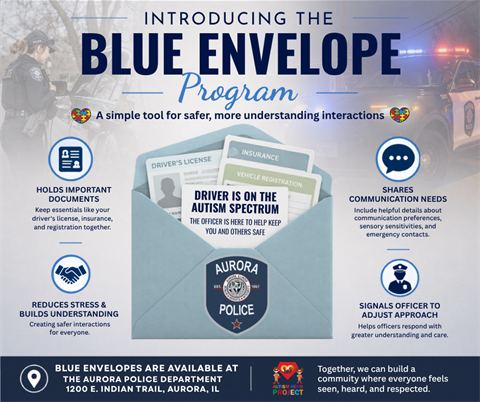
Blue Envelope Program
The Aurora Police Department is participating in the Blue Envelope Program, a voluntary safety and communication initiative designed to support individuals with autism or other communication differences during interactions with first responders.
The Blue Envelope serves as a simple, recognizable visual aid for police officers. It helps alert officers that a person may have communication needs, sensory sensitivities, or other important considerations that could affect the interaction.
How It Works
Community members may pick up a Blue Envelope at the Aurora Police Department front desk.
Inside the envelope, participants can place important documents and information, such as:
- A copy of a driver’s license
- Vehicle insurance information
- Communication preferences
- Sensory sensitivities
- Behaviors that may be misunderstood
- Emergency contact information
During a traffic stop or other police interaction, presenting the Blue Envelope helps officers quickly recognize that communication adjustments may be needed.
Why It Matters
The goal of the Blue Envelope Program is to reduce anxiety, minimize confusion, and promote safer, more effective interactions between officers and community members.
By providing officers with helpful information upfront, the program supports better understanding during high-stress encounters and helps improve safety for everyone involved.
Where to Get a Blue Envelope
Blue Envelopes are available at:
Aurora Police Department Front Desk
1200 E. Indian Trail
Aurora, IL 60505
This program is voluntary and is intended to serve as an additional communication tool for community members and officers.
For more information about supporting individuals with autism and improving communication during everyday interactions, visit the Autism Hero Project. This organization provides resources and education focused on building understanding, promoting safety, and strengthening connections between first responders and the autism community.